When facts matter more than assumptions, surveillance can provide the evidence needed to make informed decisions. Whether you’re an attorney preparing for litigation, an insurance company investigating a questionable claim, or an individual seeking answers about a personal matter like cheating spouse, infidelity or child custody- a professional surveillance helps uncover objective information while staying within the boundaries of the law.
Private investigation surveillance is one of the most effective investigative techniques because it relies on documented observations rather than speculation. Experienced investigators use specialized equipment, strategic planning, and years of field experience to collect evidence that may support legal cases, insurance investigations, workplace matters, and personal investigations.
In this guide, we’ll explain the six primary types of surveillance used by private investigators, when each method is appropriate and we will also learn that why hiring a trained surveillance specialist can make a significant difference.
What Is Private Investigator Surveillance?
Private investigator surveillance is the process of discreetly observing people, locations, vehicles, or activities to gather factual information. The objective is to document events accurately through photographs, videos, written observations, and timelines while complying with applicable laws and privacy regulations.
Unlike television portrayals, surveillance is not about dramatic stakeouts. Successful investigations require careful planning, patience, attention to detail, and the ability to adapt as situations change.
Professional surveillance may be used in cases involving:
- Insurance fraud investigations
- Workers’ compensation claims
- Suspected infidelity
- Child custody disputes
- Missing persons investigations
- Corporate investigations
- Employee misconduct
- Civil litigation support
Why Surveillance Is an Effective Investigative Tool
Surveillance allows investigators to verify information through direct observation rather than relying solely on statements or assumptions.
Benefits include:
- Objective documentation of activities
- Time-stamped photographic or video evidence
- Better decision-making based on facts
- Support for legal and insurance investigations
- Identification of inconsistencies in reported information
When conducted professionally, surveillance provides valuable evidence while respecting legal and ethical boundaries.
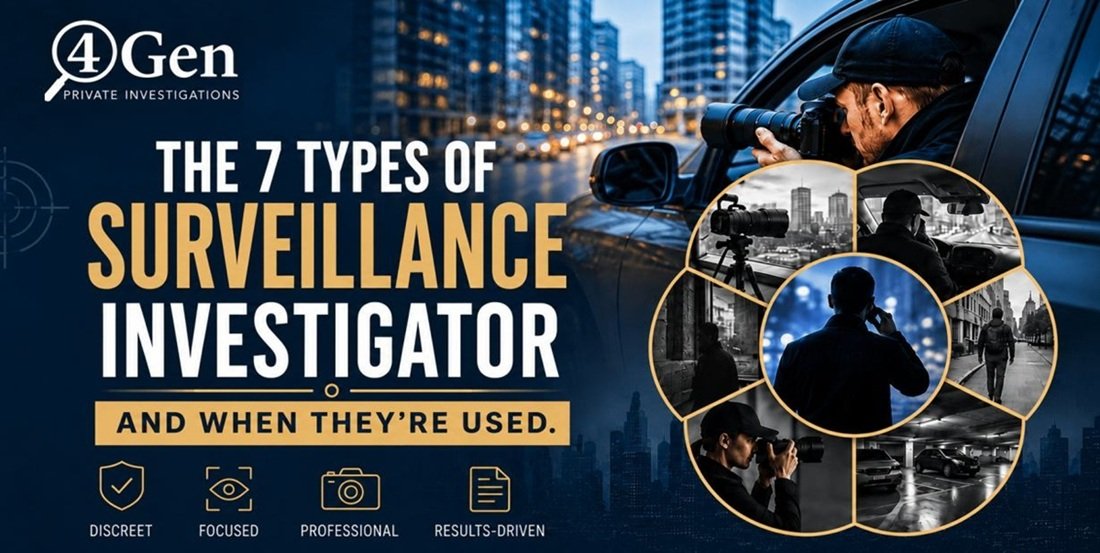
The 6 Main Types of Private Investigator Surveillance Includes-
1. Stationary Surveillance
Stationary surveillance involves observing a specific location from a fixed position for an extended period.
Investigators may monitor:
- Homes
- Businesses
- Parking lots
- Hotels
- Construction sites
- Storage facilities
This method is commonly used when investigators expect a subject to arrive, leave, or meet someone at a known location.
Best Used For
- Cheating Cases like for Infidelity investigations
- Insurance fraud investigations
- Employee theft or workers’ compensation investigations
- Corporate investigations
- Criminal defense support
Advantages
- Minimal movement reduces the chance of detection.
- Allows extended observation over several hours.
- Effective for documenting routines and patterns.
2. Mobile Surveillance
Mobile surveillance involves discreetly following a subject as they travel by vehicle or on foot.
Unlike fictional portrayals, investigators must maintain a safe distance, anticipate traffic conditions, and avoid drawing attention.
Common Uses
- Following daily routines
- Locating frequent destinations
- Documenting meetings
- Confirming employment activities
- Insurance claim investigations
Challenges
Mobile surveillance requires experience because investigators must balance maintaining visual contact with avoiding detection.
3. Foot Surveillance
Sometimes vehicles cannot reach certain areas. In those situations, investigators continue surveillance on foot.
This method is particularly useful in:
- Shopping centers
- Airports
- Downtown business districts
- Hotels
- Public events
- Bars & Restaurants
Foot surveillance requires investigators to blend naturally into the environment while maintaining observation.
When It’s Used
- Domestic investigations
- Corporate investigations
- Infidelity investigations
- Witness location
- Public event monitoring
4. Vehicle Surveillance
Vehicle surveillance focuses on documenting vehicle movements rather than the individual alone.
Investigators may observe:
- Travel patterns
- Frequent stops
- Business visits
- Residential visits
- Vehicle usage
Vehicle surveillance often complements mobile surveillance to create a clearer picture of a subject’s activities.
Common Cases
- Workers’ compensation investigations
- Fraud investigations
- Corporate investigations
- Asset investigations
5. Electronic Surveillance (Where Legally Permitted)
Modern investigations often involve technology that assists investigators in documenting observations. However, electronic surveillance must always comply with applicable laws and regulations.
Depending on legal authorization and jurisdiction, investigators may use:
- High-resolution cameras
- Long-range photography equipment
- Night-vision equipment
- Time-stamped digital recording devices
It’s important to note that investigators do not have unlimited authority to intercept private communications or access protected information. Professional investigators like at 4Gen Private Investigations operate within legal and ethical limits.
Appropriate Situations
- Long-distance observation
- Low-light conditions
- Large commercial properties
- Complex insurance investigations
6. Covert Surveillance
Covert surveillance involves gathering information without revealing that an investigation is taking place.
This approach combines planning, observation, and discretion to minimize the possibility of influencing the subject’s behavior.
Frequently Used For
- Corporate investigations
- Internal theft investigations
- Employee misconduct
- Fraud investigations
- Civil litigation support
Because covert surveillance requires careful judgment and adherence to legal standards, it should only be conducted by trained professionals.
7. Counter Surveillance
Counter-surveillance involves identifying and assessing whether an individual, business, or property is being monitored by another person.
It’s often requested by businesses, executives, attorneys, and individuals who have legitimate concerns about being followed or monitored.
Common Uses
- Executive protection
- Corporate espionage investigations
- Stalking and harassment cases
- High-profile or high-net-worth individuals
- Sensitive business negotiations
- Personal safety and privacy concerns
Advantages
- Helps identify potential surveillance activities early.
- Supports the protection of confidential business and personal information.
- Assists individuals in understanding and documenting suspicious behavior.
- Provides peace of mind through professional assessment and evidence-based reporting.
Choosing the Right Surveillance Method
Every investigation is unique. The appropriate surveillance strategy depends on factors such as:
- Investigation objectives
- Subject’s routine
- Location
- Budget
- Timeframe
- Safety considerations
- Applicable laws
Experienced investigators often combine multiple surveillance techniques to obtain the most accurate and complete picture of a situation.
When Should You Hire a Surveillance Specialist?
A surveillance specialist can be valuable when reliable evidence is needed to support an important decision.
Professional surveillance may be appropriate if you need to:
- Investigate suspected insurance fraud
- Verify workers’ compensation claims
- Document suspicious activity
- Support a child custody case
- Investigate suspected infidelity
- Gather evidence for civil litigation
- Monitor employee misconduct
- Protect business interests
Rather than relying on assumptions, surveillance provides documented observations that can help clients understand what is actually occurring.
Why Experience Matters in Private Detective Surveillance
Successful surveillance requires more than simply observing someone. Investigators must know how to:
- Plan surveillance operations
- Select effective observation points
- Maintain discretion
- Adapt to changing circumstances
- Document observations accurately
- Preserve evidence
- Comply with applicable laws
An experienced private detective surveillance professional understands how to collect factual information while maintaining professionalism throughout the investigation.
Frequently Asked Questions
Is private investigator surveillance legal?
Licensed private investigators generally conduct surveillance in public places and other lawful locations while complying with applicable federal, state, and local laws. Specific legal limitations vary by jurisdiction.
How long does surveillance usually last?
The duration depends on the objectives of the investigation. Some cases require only a few hours, while others may involve multiple days of observation.
Will the subject know they’re being watched?
Professional investigators use planning, experience, and discretion to reduce the likelihood of detection. However, no surveillance operation can guarantee that a subject will never become aware of an investigation.
Can surveillance evidence be used in court?
In many situations, properly documented surveillance evidence may be relevant in legal proceedings. The admissibility of evidence depends on the facts of the case and the applicable rules of the court.
Final Thoughts
Private investigator surveillance is one of the most valuable tools available for uncovering factual information. Whether the investigation involves insurance fraud, workers’ compensation, corporate misconduct, civil litigation, or personal matters, selecting the appropriate surveillance method can significantly improve the quality of the evidence collected.
From stationary and mobile surveillance to covert observation and specialized documentation techniques, each approach serves a specific purpose. Working with experienced investigators helps ensure that surveillance is conducted professionally, ethically, and in accordance with the law. If you’re seeking reliable investigative support, a qualified surveillance professional can help determine the most appropriate strategy based on your unique circumstances and investigative goals.
